The Ultimate Guide to VPD: Why Vapour Pressure Deficit Matters

Vapour Pressure Deficit (VPD): What It Is and Why Every Grower Should Care
Vapour Pressure Deficit (VPD) is a fundamental environmental metric for growers. It measures the difference between the amount of moisture the air can hold when saturated and the actual moisture present — in other words, the “drying power” of the air. Controlling VPD helps regulate transpiration, stomatal behavior, nutrient uptake, and plant stress, so getting it right can significantly improve growth and yield.
VPD Heatmap
RH ⟵ | Temp ↓ (5°C → 50°C)
VPD = — kPa
Legend
Leaf Temp under Dew Point (disease risk)
VPD < 0.4 kPa
0.4–0.8 kPa
0.8–1.2 kPa (ideal)
1.2–1.6 kPa
>1.6 kPa
What Is VPD (Simple Explanation)
VPD = saturation vapor pressure − actual vapor pressure. Saturation vapor pressure depends on temperature; actual vapor pressure depends on relative humidity (RH) and temperature. Practically, lower VPD means the air is more humid (less driving force for transpiration), while higher VPD means drier air (greater transpiration). This is why VPD is more informative than RH alone for horticulture.
Why VPD Matters for Plant Health and Yield
Transpiration driver: VPD controls how much water plants pull through their vascular system — influencing nutrient transport.
Stomatal response: Stomata open/close according to VPD; that affects CO₂ uptake and photosynthesis.
Disease risk & stress: Very low VPD increases risk of mould and poor gas exchange; very high VPD can cause stomatal closure, rapid water loss, and nutrient stress. Managing VPD reduces both risks.
How VPD Is Calculated (the basics)
You need:
Air temperature (°C or °F)
Relative humidity (%)
(Optional but recommended) leaf temperature for leaf-felt VPD
Common horticultural practice uses the Tetens formula to compute saturation vapor pressure at a given temperature, then multiplies by RH to get actual vapor pressure. VPD is the difference (in kPa). If leaf temperature is measured, saturation vapor pressure for the leaf temperature is used on the leaf side of the equation for a more realistic plant-experienced VPD.
Ideal VPD Ranges (Practical guide)
Use these general bands as starting targets — adjust slightly for species and setup:
Seedling / Cloning: ~0.4 – 0.8 kPa
Vegetative growth: ~0.8 – 1.2 kPa
Flowering / Fruiting: ~1.2 – 1.6 kPa
These ranges are commonly recommended in horticulture guides and industry resources. Always combine chart guidance with visual plant checks.
Controlling and Tuning VPD in Your Grow Space
Humidity control: Use humidifiers or dehumidifiers to change RH.
Temperature control: Adjust HVAC, lights, cooling, or heating to affect saturation vapor pressure.
Leaf-temperature awareness: Measure leaf temperature with an IR thermometer to set a leaf offset in charts/calculators. This improves VPD accuracy.
Airflow: Fans reduce boundary layers and prevent local humidity pockets; consistent airflow helps maintain stable VPD.
Automation / guidance tools: Consider integrating sensors and control systems to hold VPD within a target band. Pulse provides VPD charts, calculators, and guidance tools referenced by indoor growers.
Common Mistakes to Avoid
Relying on RH alone (it hides the effect of temperature).
Ignoring leaf temperature — air temp alone can misrepresent what the plant experiences.
Allowing large diurnal swings in VPD — big oscillations stress plants; aim for smooth transitions.
FAQ
Q: Is VPD the same as relative humidity?
A: No. RH measures percent saturation; VPD measures the difference between saturation and actual vapor pressure (the drying potential). VPD factors temperature into the “pressure” that drives transpiration.
Q: Should I always use leaf temperature?
A: It’s recommended when possible — leaf temp better represents the plant’s microclimate and often gives a more accurate VPD for stomatal behavior.
Q: How often should I log VPD?
A: Continuous logging is ideal for controlled environments. If manual, check multiple times per day during major light/temperature shifts to ensure VPD stays in range.
VPD is a deceptively simple metric with huge practical benefits. Use a reliable VPD calculator (I’ve provided a single-file calculator in the canvas), measure leaf temperature when you can, and aim for steady VPD within the stage-appropriate ranges above. Want me to publish this as a WordPress-ready HTML file, add schema markup (Article/FAQ schema), or create images and a featured image for the post? I can do any of those next.
-15%Hot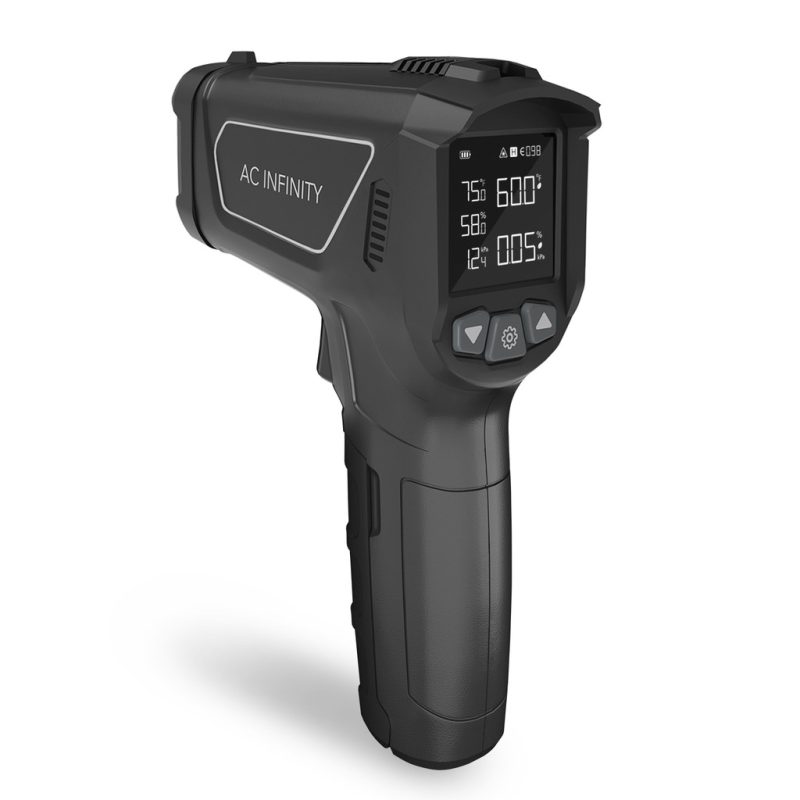
Add to basket
Quick view
Compare
Add to wishlist
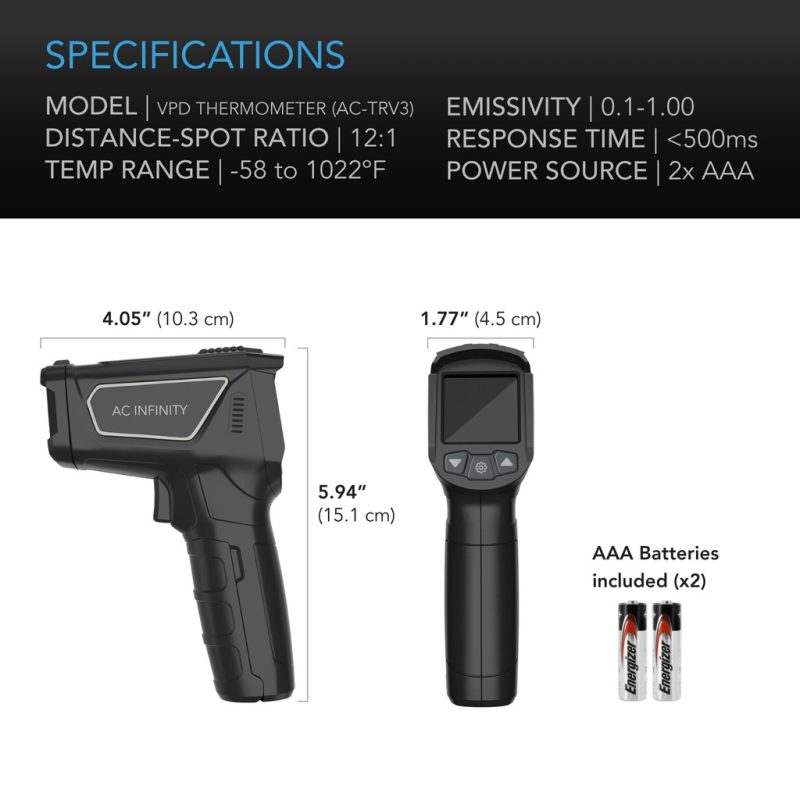
AC Infinity – VPD Thermometer
Grow Room Tools
Original price was: £33.99.£28.99Current price is: £28.99. Inc VAT
-1%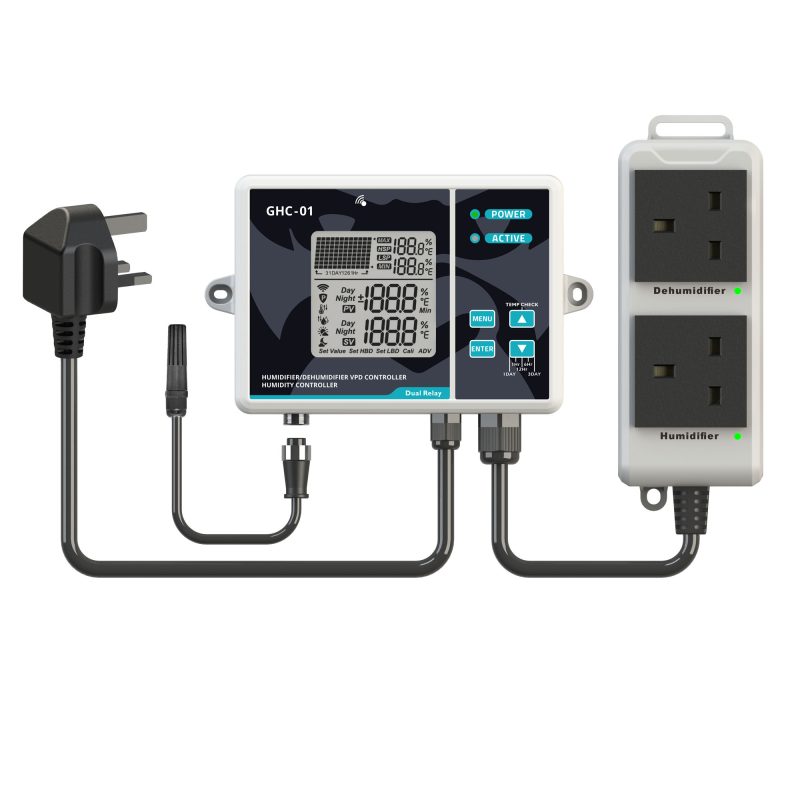
Add to basket
Quick view
Compare
Add to wishlist
Gorilla Dual VPD Humidity + Dehumidifier Controller
Humidity Control
Original price was: £94.95.£93.95Current price is: £93.95. Inc VAT
Add to basket
Quick view
Compare
Add to wishlist
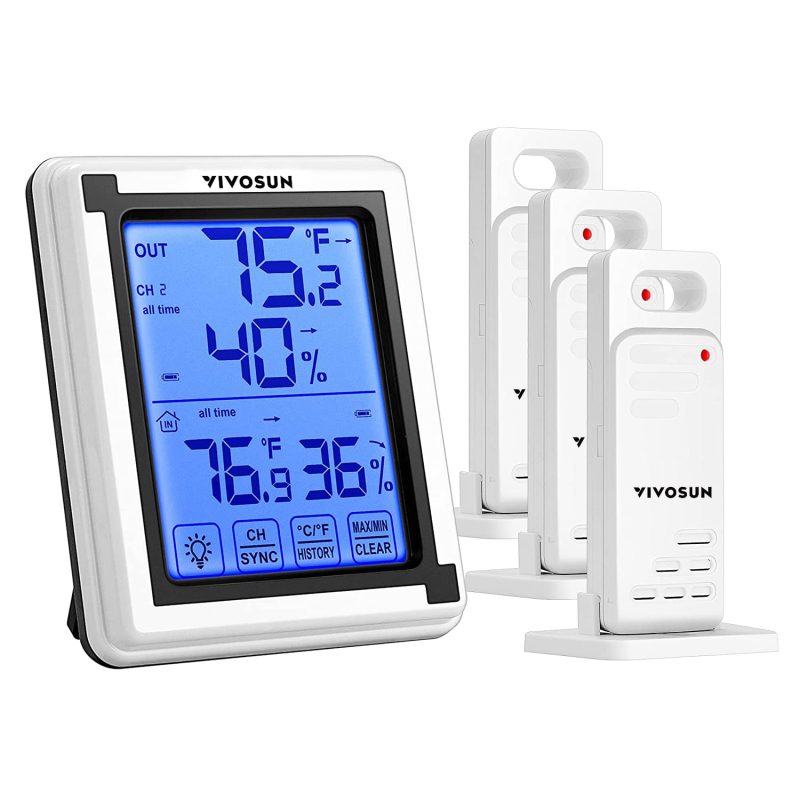
VIVOSUN – LCD Thermometer & Hygrometer + 3 Wireless Sensors
Measuring Equipment
£44.99 Inc VAT